
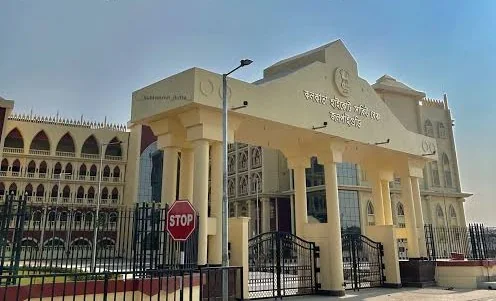
The Calcutta High Court sits at Jalpaiguri through a Circuit Bench, set up by a Presidential order of 2019, so that litigants in northern West Bengal do not have to travel to Kolkata for every High Court matter. The firm’s advocates in Siliguri appear before the Circuit Bench in writ, criminal and civil matters, and before the High Court at Kolkata where the case belongs there.
Matters heard at the Circuit Bench
- Writ petitions under Article 226 of the Constitution against the State, police, local bodies, banks and other authorities, including petitions about police inaction, bank account freezes, service and teachers’ matters, and tax notices.
- Bail and anticipatory bail under Sections 483 and 482 of the Bharatiya Nagarik Suraksha Sanhita, 2023 (BNSS).
- Quashing of FIRs and proceedings under Section 528 BNSS, and criminal revisions.
- Criminal appeals against conviction or acquittal.
- Civil appeals and revisions arising from the district courts, including second appeals under Section 100 of the Code of Civil Procedure, 1908.
Which bench hears a case
A case goes to the Circuit Bench or to the High Court at Kolkata according to where the cause of action arose and to the notifications of the Chief Justice, which can change. The districts the Circuit Bench serves include Jalpaiguri, Darjeeling, Kalimpong and Cooch Behar. Where the position is unclear, the firm checks it before filing, because a petition filed in the wrong place can lose time.
How the firm works on a High Court matter
- Review of papers. The advocates read the order or action challenged, the record below and the grounds available.
- Choice of remedy. An appeal, a revision, a writ petition or an application under Section 528 BNSS may each be open; the choice depends on the order and the stage.
- Drafting and filing. The petition is prepared with the documents annexed and filed through the High Court’s e-filing system and registry.
- Listing and hearing. The matter is heard on the dates the court lists, with interim relief argued where the facts call for it.
- Follow-up. The advocates track orders and, if needed, take the next step in the High Court or the Supreme Court.
Documents usually needed
- The order, notice or FIR being challenged, with its date
- Papers filed and orders passed in the lower court or before the authority
- Identity documents and, for a writ against an authority, the correspondence with it
- Any earlier petition in the same matter, since these must be disclosed
Practice areas that reach the Circuit Bench
Criminal Litigation & Bail · Bank Account Freeze Remedies · Taxation & Regulatory Litigation · Civil, Property & Commercial Disputes · Matrimonial & Family Law
Where the firm acts for clients
Siliguri, Jalpaiguri, Darjeeling, Kalimpong, Cooch Behar and Alipurduar. See Jalpaiguri and Maynaguri, Darjeeling, Kalimpong and Kurseong and Cooch Behar and Alipurduar. In Bengali: জলপাইগুড়ি সার্কিট বেঞ্চ. In Hindi: हिन्दी पृष्ठ.
Frequently asked questions
Can I file my High Court petition at Jalpaiguri instead of Kolkata?
Only if the matter falls within the Circuit Bench’s jurisdiction. An advocate can check this against the Chief Justice’s notification before filing.
Does a High Court petition stop the police or the department from acting?
Not automatically. The court may grant interim protection if the facts justify it and the petitioner asks for it.
Do I need to appear in person?
The advocate appears for the petitioner. The court can call the party in person if it wishes.
How long does a High Court petition take?
No fixed time can be stated. Urgent applications can be listed early, while final hearings depend on the court’s list.
This page is general information, not legal advice. This website does not advertise or solicit work, in line with the rules of the Bar Council of India.